Information
Landmark: Sango ShrineCity: Ogun
Country: Nigeria
Continent: Africa
Sango Shrine, Ogun, Nigeria, Africa
Overview
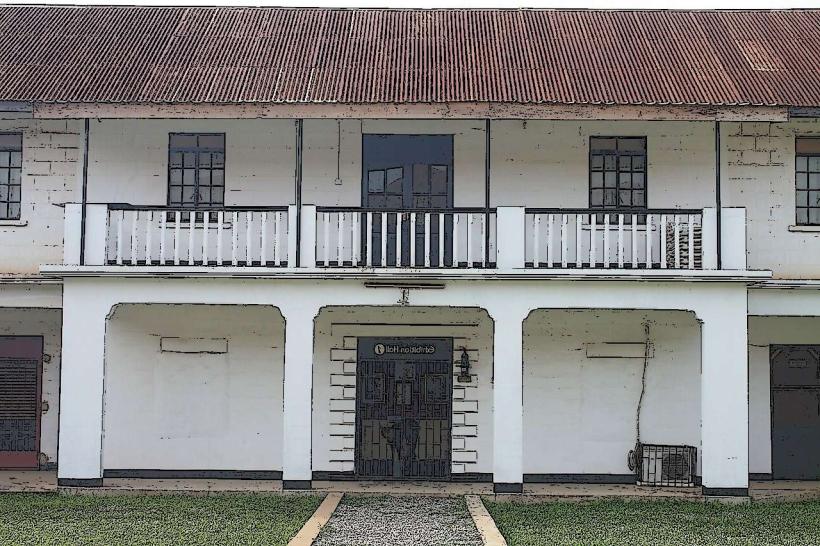
The Sango Shrine, also called the Ṣàngó Shrine, is a sacred region honoring Ṣàngó, one of the Yoruba religion’s most revered Òrìṣà, where the air often carries the faint scent of burning incense, along with you’ll find shrines to Sango scattered across southwestern Nigeria, especially in vintage Yoruba towns like Oyo, Oshogbo, Ogbomosho, Ilorin, and Ibadan, where his worship runs deep in the history and dust of their streets.So, who’s Ṣàngó-the thunderous deity whose name crackles like a summer storm?Ṣàngó was a historical king, the third Alaafin of Oyo, and later deified as the god of thunder, lightning, fire, and justice, in addition Ṣàngó, once the third Alaafin of Oyo, ruled with fierce authority before becoming revered as the god of thunder, lightning, fire, and justice, his name echoing like a drum in the storm, more or less In Yoruba mythology, he wielded uncanny power, calling down bolts of lightning that split the sky and struck his foes.Ṣàngó is still actively worshipped by many Yoruba people and in the African diaspora, after that after he died, people worshipped him as an Òrìṣà, believing his spirit still walked among them like a warm breeze through the village at dusk, slightly often Many Yoruba people still honor Ṣàngó, and his name carries across the ocean, where drums beat for him in communities throughout the African diaspora, meanwhile sango’s symbols include the double-headed axe, known as Oṣè, thunderstones called edun ara, and vivid red cloth glowing as fresh palm oil.The colors are red and white, like fresh paint against a snowy fence, equally important he carries fierce justice, raw virility, steady leadership, and a power that burns like fire.The sacred animal is the ram, its curved horns catching the light like polished bronze, to boot friday is the day of worship, known locally as Ojo Jakuta.A typical Sango Shrine stands enclosed and still, its walls of mud or cement draped with red and white cloth, edged with cowrie shells, and marked by carved thunderbolts and murals that blaze with lightning and flames, while in bigger, long-established towns like Koso in Oyo, the shrine often stands grand and detailed, its carved wood catching the light, and it becomes the heart of the celebration during major festivals.Inside the shrine, you’ll usually find a sacred altar, the Oju Ọrun, where people leave offerings-sometimes a bowl of fresh fruit or a flickering candle, equally important it might hold sacred items such as the Oṣè Sàngó, a double-headed axe that gleams in the light, along with edun ara thunderstones and carved figurines.Babalawo priests or devoted Sàngó worshippers lead the rituals and keep the space in order, sweeping away leaves before the drums begin, in turn every shrine dedicated to Sango includes ritual offerings-kola nuts, fiery alligator pepper, a ram for sacrifice, palm oil, roasted yam still warm to the touch, bitter kola, and a splash of red wine.Drumming and dance lie at the heart of Sango’s rites, with the deep, steady pulse of the bàtá drum and the sharp, lyrical call of the talking drum carrying the devotional music, on top of that during performances, dancers often slip into a trance, swaying as if Sango himself has taken hold of them.Fire displays can include fire-eating or symbolic ceremonies, often lighting up the air with sparks during large festivals, alternatively praise Chants (Oriki): Worshippers speak Sango’s praise names in rich, rolling verses, calling him to appear and shower them with his fiery blessings.At the Sango Shrine, the biggest event of the year is the Sango Festival, held every August in Oyo, when drums pound through the streets and crowds gather to celebrate, meanwhile the festival pulls in devotees, curious tourists, and culture lovers from every corner of Nigeria and far beyond, some arriving with drums slung over their shoulders.One highlight is the procession, led by the Alaafin of Oyo, his robes catching the sunlight as drums echo down the street, as a result fire dancers spinning flames in age-vintage style.Believe it or not, Live recreations of Sango’s legendary powers, with sparks flashing from her blade, after that drums thump while dancers spin in dazzling, swirling cloth.Sango Shrines aren’t only places of worship-they’re part of the region’s cultural heritage, where weathered wooden gates still greet visitors, in addition they keep Yoruba cosmology alive, passing down its stories and chants by word of mouth.Oddly enough, They act as hubs of identity for those who practice the traditional Yoruba religion, places where the scent of burning incense lingers in the air, consequently they stand as living symbols of defiance, carrying the thread of African spirituality through the storm of colonial rule and shifting faiths.As it turns out, Sango’s worship traveled far beyond Nigeria, crossing the Atlantic with enslaved Africans during the brutal voyages of the slave trade, to boot today, you can find shrines to Sango-known as Changó or Xangô-in Cuba’s Santería, Brazil’s Candomblé, Haiti’s Vodou, and among Shango Baptists in Trinidad and Tobago, where candles flicker and drums beat in rituals that still reflect the Yoruba homeland despite oceans apart.Sango Shrines pulse with color and energy, capturing the deep, layered spirit of Yoruba religious life, from the scent of burning incense to the rhythm of distant drums.
Author: Tourist Landmarks
Date: 2025-09-23